
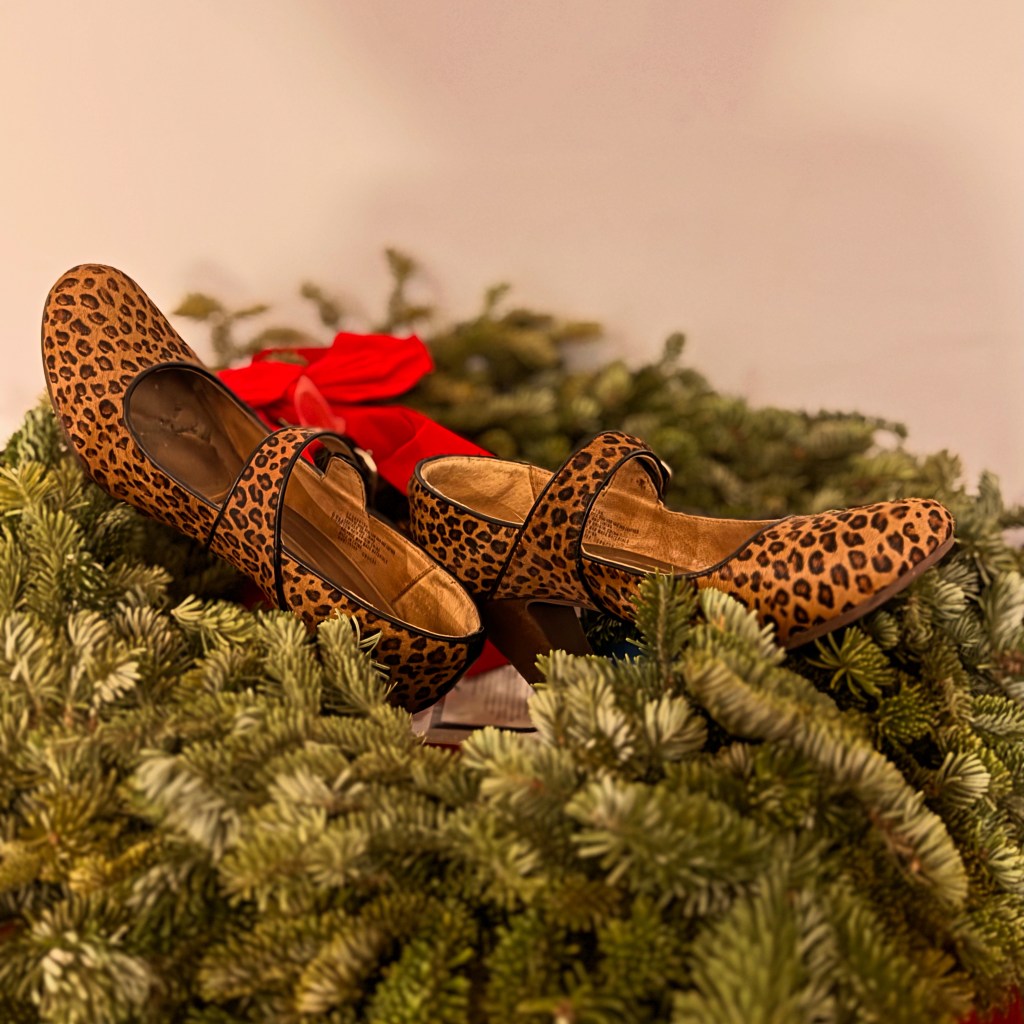
Sometimes, I turn my shoes sideways, opposite each other, never facing the direction of my departure. This way, spirits can’t slip into the shells I leave and follow me to where I’m most vulnerable; my home, bedroom—evenings by myself. It’s a ritual gifted in the oral tradition by a traveling author who visited my elementary school in the ‘80s. A simple act of protection wrapped in the art of storytelling, it’s something I return to in times of stress, even in adulthood.
I can’t be sure who the author was but she was older, and kind, and had a large number of African folktales memorized that she recited to the rural students of New Era Elementary. It was probably Verna Aardema, also from New Era, author of Bringing the Rain to Kapiti Plain, and a great aunt to one of my classmates.
Many years later, on a 90⁰ day in early June, I slip off my work heels to sit outside and write about the importance of creativity. I’m taking a break from documenting patterns of sexual harassment and bullying in the workplace. It wasn’t the details of inappropriate behavior that I needed to step away from, but the victims’ statements of impact; instances of passive aggressive shunning and the humiliation that comes from being asked, over and over, in varying ways and contexts, “Why didn’t you tell him to stop?” It was too familiar and too much.
I have the immense privilege of working in a wooded neighborhood in West Michigan. A lakeshore community full of retiree artists who might, if they see me outside, stop by and join me on my break. Instead of an artist, a deer joins me on the lawn, three spotted fawns trailing after her. She watches me from over her shoulder as she crosses the parking lot, wary, but not overly concerned. It’s too hot for a predator to take up chase, but I imagine she knows that I’m potentially dangerous—maybe just not as dangerous as the heat. Like the drought of 1988, when my cousins and I danced outside, yelling at the sky.
Reading Rainbow featured Bringing the Rain to Kapiti Plain on June 6, 1983, with James Earl Jones narrating. His rumbling voice reminded me of the thunder promised by the clouds hanging over the herder, Ki-pat, and predators and prey who waited in heat of Kenya, together, for the rain. This was before access to the internet or cable television, but after Return of the Jedi. We knew that voice and watched enraptured until the Big Lake warmed enough to receive our tanned bodies.
For years, I stood on one leg, the other leg balancing against my knee, like the main character from Aardema’s book. I did this through pledges of allegiance, “Our Fathers,” and then in the waves of Lake Michigan, testing my strength against the current. When I wasn’t in the water, I was thinking about it and the story of the cowherder, standing on the dry, Kenyan plains under the heat of an African sun, felt immediate and familiar. Like a spell, or poem, it invites the reader to chant the refrain of “the big, black cloud,/all heavy with rain,/that shadowed the ground,/on Kapiti Plain.”
I know I wasn’t the only child inspired by the Nandi story to shoot arrows at dark clouds, hoping for relief. And I wasn’t the only one on the floor of the library who asked an author, then a minor celebrity, for more answers.
What happens if the rain doesn’t stop?
Then, my child, it floods.
What happens when the crocodiles and lions are no longer thirsty?
Then they will hunt.
How do I protect myself from them?
Turn your shoes away from you and in opposite directions before you sleep. If you don’t, the beasts will follow, and they will take you. But, if you turn your shoes, they will get lost, and you will be safe.
I turned forty-four this month. In my free time, I write poetry and raise goats. I should feel safe. But, when I took my shoes off to write about transformative art, I see they’ve landed in opposite directions: one toe pointing at the deer, the other at my office. And, as more time goes by with less relief, I needed this reminder that, as tired as I am, so are the beasts.
Maybe it’s time to shoot the sky.

 (Ni)Cole Bernadette Birkett